


Here’s the need-to-know stuff about the energy source, wind!
Description
As the Earth is heated by the Sun, some regions become warmer than others. The air in the warm regions rises. Air from cooler regions rushes in to replace it. This creates air currents – what we know as the wind.
Where can you find wind power?
Winds affect every part of the Earth. There are over 130 wind farms in the UK and many more are under construction.
Wind turbines can be put in any area where there is a lot of wind! Some are on land and some are in the sea – these are called ‘offshore’ wind farms!
How is it made into electricity?
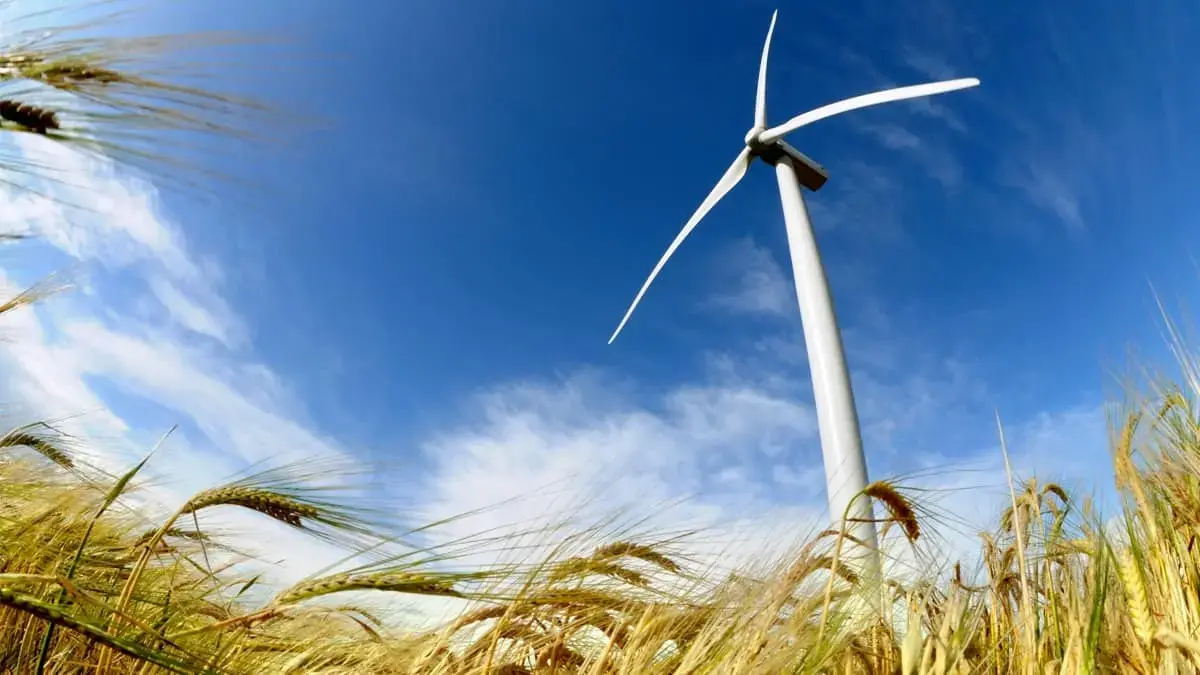
The wind blows turbine blades, which then turn. This turning motion is transferred to a generator to produce electricity.
What are the advantages of using wind?
- It is a renewable source of energy, which means that it will not run out!
- As one of the windiest countries in Europe, it is perfect for our climate!
- Wind energy is pollution free.
- The land between the turbines can be used for farming meaning it doesn’t take up too much space.
- Wind turbines can be used to supply energy in remote places.
- There is no need to dig underground or drill for the resource; therefore there is less land pollution!
What are the disadvantages of using wind?
- There are potential local wildlife impacts such as birds being killed by the blades of the turbine. However, the risk to nature from climate change is far greater than this.
- The wind is not always predictable. Some days may have a lot of wind and others may have no wind at all.
📖 Words to know
- Renewable
- An energy source that can be used again and will not run out.
- Turbine
- A device that uses moving water or air to spin a rotator and make electric power.
- Generator
- A device that turns movement, like spinning steam-driven blades, into electricity.
- Carbon emissions
- The carbon released into the air when something is burned.
⚠️ Watch out!
Where Britain’s electricity comes from
In spring 2026, more than half of Britain’s electricity — 53% — came from renewables like wind and solar. Most of the rest came from gas (29%) and nuclear power (17%).
Figures: UK government Energy Trends, March to May 2026.
🎧 Listen and watch
- Catching Wind and Sunshine — how we capture the weather and turn it into power.
- The Power Stash — storing electricity for when the wind is not blowing.
How much do you know about wind power?
What makes the wind in the first place?
- The Sun heating some places more than others
- The Moon pulling the air
- Waves in the sea
- Trees moving
What does "offshore" wind mean?
- Turbines out at sea
- Turbines on hills
- Turbines in gardens
- Turbines in factories
What happens to a wind turbine when the wind stops?
- It stops making electricity
- It keeps going on batteries inside
- It spins faster
- It makes electricity from rain
We’ve got a whole series about energy, electricity, and power generation! It’s called Curious Kate, and you can listen to it below!
Add a comment