



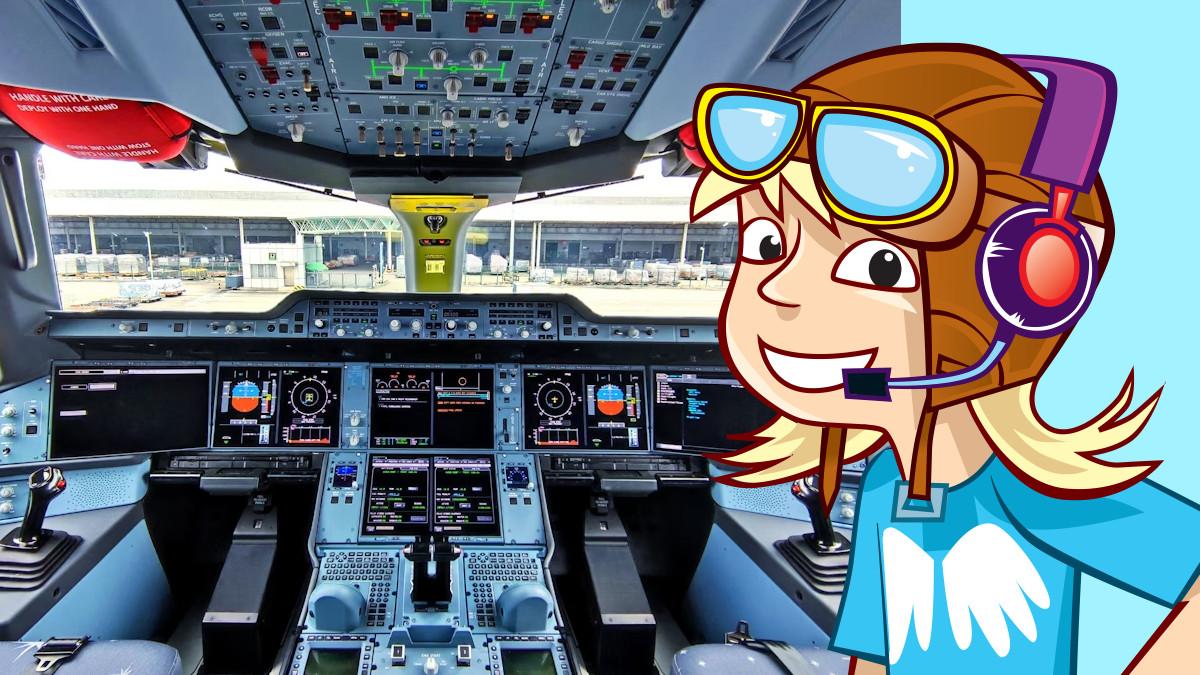
Artificial Intelligence. It’s one of several new technologies that’s helping make aircraft and airports smarter, safer and greener!

Air Traffic Control
Airports are busy places and the skies above them are even busier! Around 2.6 million planes fly each year through UK airspace, and there’s increasing demand for more flights from a wider variety of aircraft. And that’s where AI can help – it can look at weather, air traffic and flight plans all at once, and help choose the best route for each aircraft.
AI can process an enormous amount of information and learn to spot patterns, helping air traffic controllers plan flights and make the best informed decisions to reduce delays, avoid storms and save fuel.
Now, before and after any flight, passengers will make use of the terminals, and that’s our next stop…
In the Terminal
AI is already hard at work helping passengers move faster through the terminals – streamlining check-ins, security clearance and boarding processes. AI-powered biometric systems can help with facial recognition to speed passengers through the terminals without needing physical documents.
AI can also help manage passenger flows, spotting when terminal areas get crowded and say open more security lines to stop long queues.
It can also help make baggage handling smoother, tracking bags in real-time to make sure they don’t fly to the wrong holiday.
Behind the scenes, AI can help airports run like well-oiled machines, with high-tech cameras spotting unusual activity and anything rather strange…
But AI doesn’t stop on the ground, it’s heading to the skies too. Meet a future of flight: self-piloted planes!
In the Air
Thanks to AI, not only might the auto-pilot help fly planes once in the air, it might also help them take off and land. AI can even help make aviation more sustainable and improve fuel efficiency. By analysing aircraft sensors and flight data recorders, as well as weather, flight routes and passenger load, AI can optimize fuel consumption. One tool can even help reduce fuel consumption by suggesting an optimal climb speed during take-off.
In the Hanger
And here in the hanger, AI can help engineers improve maintenance and get planes back flying quicker. It can track aircraft components in real-time, forecast faults and even plan repairs whilst a plane is in the air. This will help reduce downtime, cut repair costs and improve operational efficiency.
AI and tech can also help out on the runway, where a defect or object could result in passenger delays and be a potential risk to safety. So imagine if you could digitise the runway with a virtual twin, helping airport management to pinpoint areas requiring attention and schedule maintenance. And by using remote sensing, objects that shouldn’t be on a runway, like a bolt or even a dead animal, could be spotted quickly and removed.
But we have to remember that AI is powerful stuff. So it’s really important that it’s used safely, ethically and responsibly, and that through cyber security, it can’t be hacked. That means making sure it helps everyone, works fairly and always follows the rules. So, to sum up, AI is helping airports and aircraft become faster, safer and greener, using data to help human operators make informed decisions, and help developed new innovative ideas. From smart bags to flying bots, the future is looking bright and brilliantly brainy!
CLICK HERE to find out more about STEM careers in aviation and aerospace with the CAA. Aviation and aerospace needs to be ready for the future and it needs different talent, ideas and values to make that happen. They need talented people like you!
MOBILE: Amy's Aviation: Kids Guide to Airplanes & Airports
The podcast that discovers how airplanes fly and what goes on behind-the-scenes at airports
AMY AVIATION – REACHING FOR THE SKY
CREATED WITH SUPPORT FROM A CAA REACH FOR THE SKY CHALLENGE GRANT – FIND OUT MORE AT CAA.CO.UK
Add a commentAmy’s Aviation
Join Amy Aviation on her quest to find out more about planes and special places!
More From Amy’s Aviation