



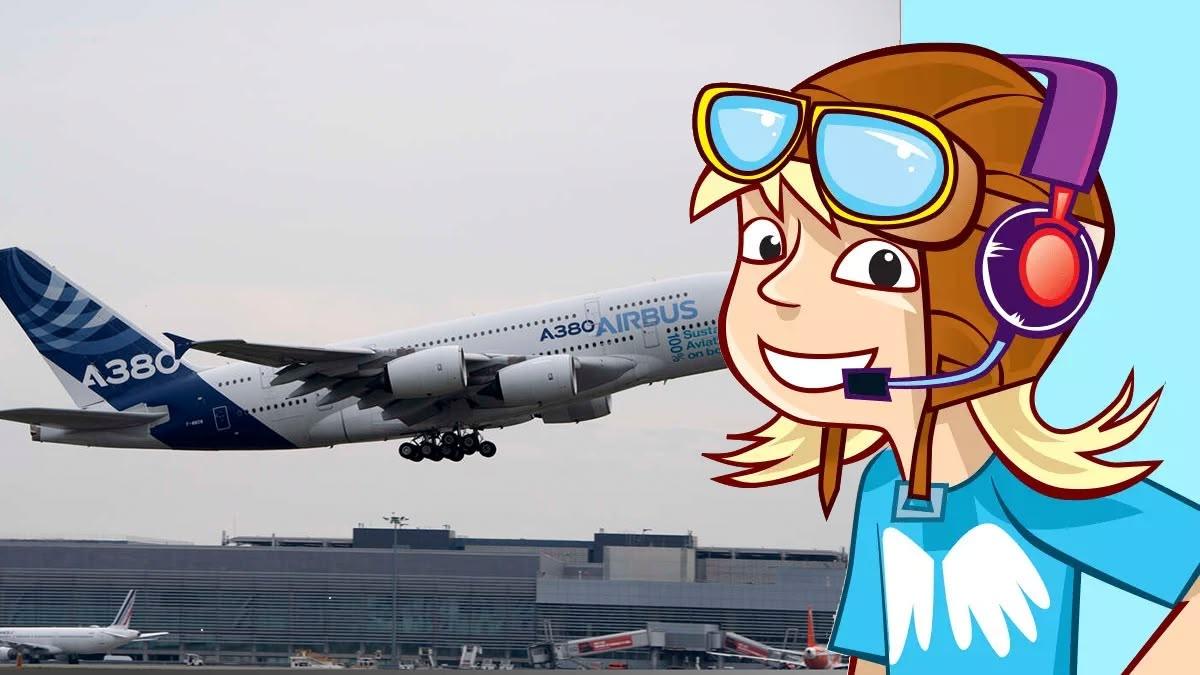
The wings are one of the most important parts of an aircraft.
You might have seen the huge Airbus A380 – the largest passenger plane ever built and thought “that must have the largest wingspan”.
Well, they are large at 80 metres, but there’s another plane with even bigger wings! That’s the Stratolaunch Roc and it’s 117 metre wings are longer than a football pitch!
Now, we all know that planes need wings to help them fly. But while they look simple, they are anything but. For a start, they need to be incredibly strong to withstand the immense forces they encounter during take-off, landing and flight.

Wings come in all shapes and sizes.
- Long and narrow ones help planes glide through the air, like paper planes you might have made. They’re super fuel-efficient but not great at sharp turns.
- Swept-back ones that are very good at supersonic speeds – that’s when going faster than the speed of sound, but are no match when it comes to endurance.
Wings also need to be very strong to give the aircraft lift – and to support the engines that make planes move.
Nature has had millions of years to develop and perfect things… and that includes wings. Biomimicry… that’s biologically inspired engineering, is looking at some of nature’s best designs to help solve technological challenges. An example of biomimicry is winglets – those vertical wing-tip extensions at the end of plane wings are inspired by shark dorsal fins. Yep, you heard me right… sharks! Winglets significantly reduce a plane’s drag, making them more fuel efficient. So next time you see a shark, say thanks for the smooth flight. Another example is by examining how bird’s fly…
Like the Albatross? Their massive wingspan helps them fly hundreds of kilometres without flapping. Talk about a natural-born pilot.
And guess what… plane builders are taking notes from these winged wonders and asking if they can make plane wings more like bird wings – longer, leaner and lighter means better aerodynamic performance, reducing fuel and carbon emissions.
But if wings become too long, they won’t fit into airports! So what’s a solution?
Folding wings! Engineers are developing wings that fold up when aircraft are taxiing to the runway, and unfold and lock before take-off. Kind of like how birds tuck in their wings when they land. Clever, right?
Innovators are going a step further too! Airbus is investigating special sensors that can sense gusts of wind and adapt to them instantly. By working together, technologies are ensuring wings keep aircraft soaring for generations to come… with a little inspiration from the Albatross, of course.
Now, no one knows exactly what future wings may look like or how they might work. Maybe they’ll bend… or stretch… or even change shape mid-flight like some sort of transformer plane.
There’s a wide range of careers behind aviation wings… from the aeronautical engineers and mechanics who design and maintain them, to the Avionics Engineer who specialize in the plane’s electrical and electronic systems of and Propulsion Engineers who focus on the design and development of aircraft engines, which are often attached to the wings.
So, next time you look up and see a plane in the sky, or you’re looking out of a plane’s window, just think: the humble wing is part of a process of innovation, imagination and yes, even a little inspiration from nature – whether seagulls or sharks.
MOBILE: Amy's Aviation: Kids Guide to Airplanes & Airports
The podcast that discovers how airplanes fly and what goes on behind-the-scenes at airports
MOBILE: Amy's Aviation: Kids Guide to Airplanes & Airports
The podcast that discovers how airplanes fly and what goes on behind-the-scenes at airports
AMY AVIATION – REACHING FOR THE SKY
CREATED WITH SUPPORT FROM A CAA REACH FOR THE SKY CHALLENGE GRANT – FIND OUT MORE AT CAA.CO.UK
Add a commentAmy’s Aviation
Join Amy Aviation on her quest to find out more about planes and special places!
More From Amy’s Aviation