



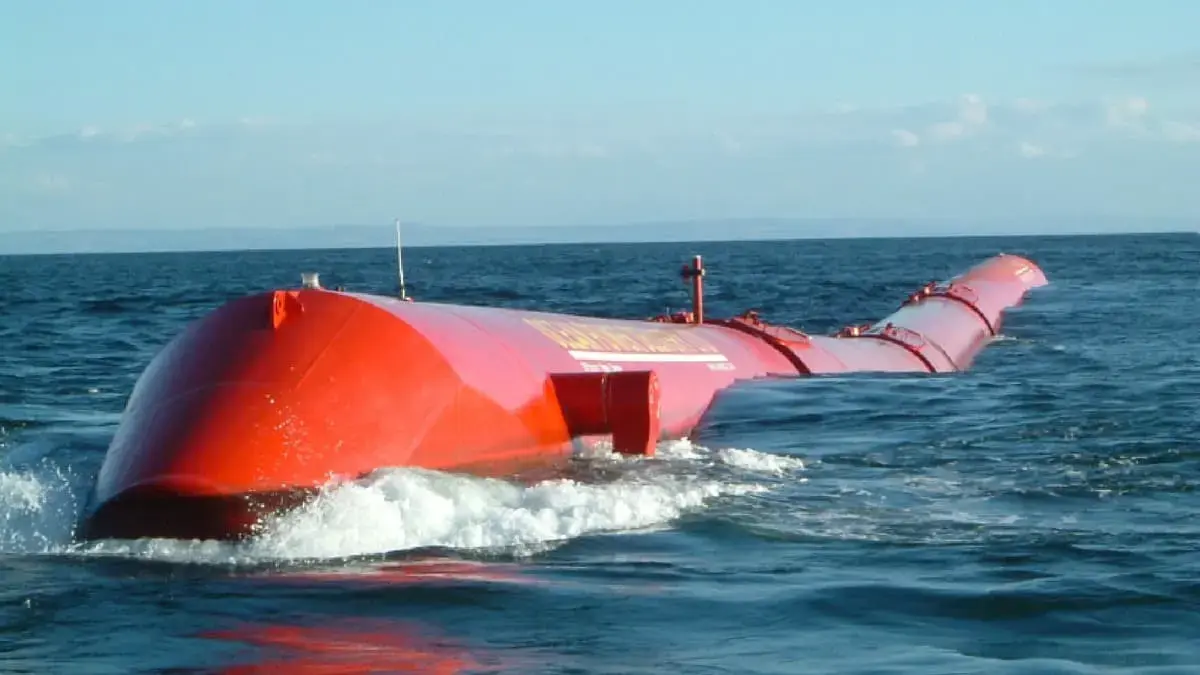
Here’s the need-to-know stuff about the energy source, waves!
Description
When wind blows over areas of water it creates waves. Some of the energy from the wind is transferred to the waves, which then carry this energy as they move through the water.
Where can you find wave energy?
Wave energy can be harnessed anywhere in the world where there is enough wind to produce waves.
In the UK the best places for harnessing wave energy are North-West Scotland, Wales and South-West England. However there is only one commercial wave energy plant in the world, in Portugal, and this only generates very small amounts of electricity. But several are planned for the UK.
How is it made into electricity?
Wave energy can be harnessed out at sea or by the shoreline. For example, waves reaching the shore can be used like a piston to push air up and down a large pipe. The force of the air being pushed is used to turn a turbine. This turbine is attached to a generator that creates the electricity.
There are many other ways to make electricity from waves – they all convert the energy in the waves to electrical energy.
What are the advantages of using wave power?
- It is a renewable source of energy, which means that it will not run out.
- As an island we have a lot of suitable coastline and therefore could harness a lot of wave energy.
- The energy source is free.
- No fuel is needed and no waste or emissions are produced.
What are the disadvantages of using wave power?
- Wave power is still under development – it could be 10 years before it is ready to be used on a large scale.
- Wave power is more expensive than other forms of electricity production.
- Wave power devices need to be able to withstand very rough weather – it could cost a lot of money to repair damage caused by storms
- Even in the most suitable spots, wave energy can be unreliable because it depends on the wind.
📖 Words to know
- Renewable
- An energy source that can be used again and will not run out.
- Turbine
- A device that uses moving water or air to spin a rotator and make electric power.
- Generator
- A device that turns movement, like spinning steam-driven blades, into electricity.
- Carbon emissions
- The carbon released into the air when something is burned.
⚠️ Watch out!
🎧 Listen and watch
- Facts about water power! — Curious Kate on the power in moving water.
- Grid for Good: Energy Dilemmas — the choices behind how a country makes its electricity.
How much do you know about wave power?
What makes waves in the sea?
- Wind blowing across the water
- The Moon
- Fish swimming
- Rain falling
Is wave energy renewable?
- Yes — the wind keeps making waves
- No, waves run out
- Only in summer
- Only near cities
Are there lots of wave power stations in the world?
- No, only a very few
- Yes, thousands
- Yes, one in every country
- Only in Britain
We’ve got a whole series about energy, electricity, and power generation! It’s called Curious Kate, and you can listen to it below!
Add a comment