



 Apple Podcasts
 Spotify
 Player FM
 Pocket Casts
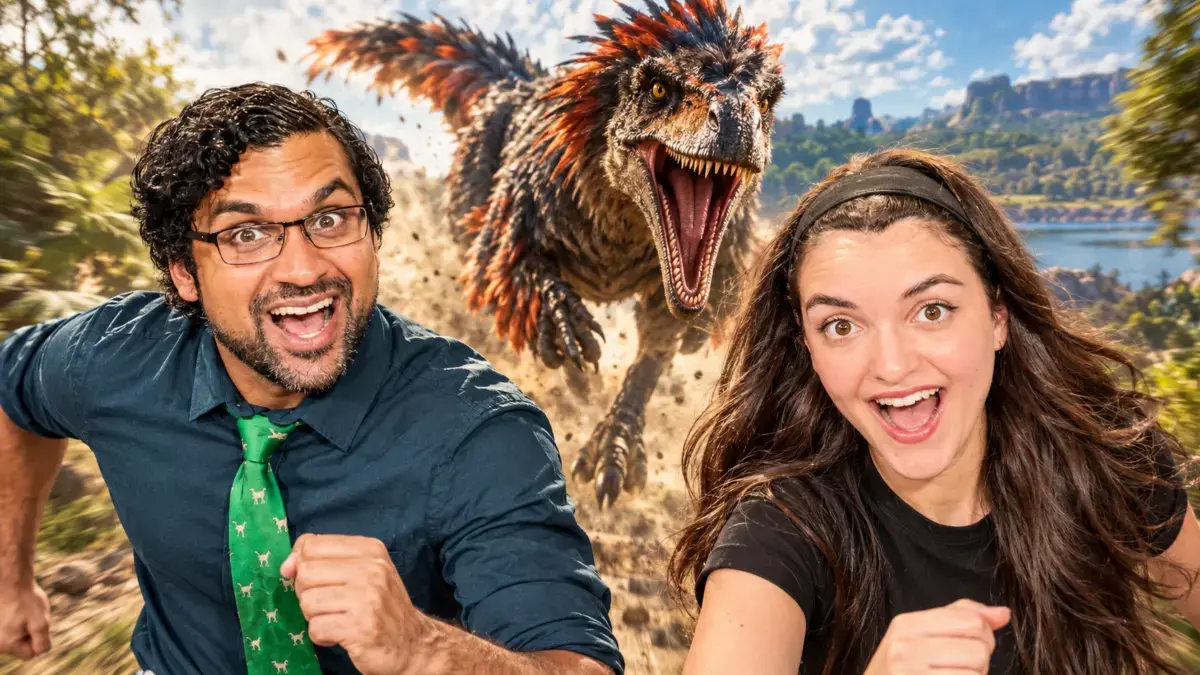
Dinosaurs ruled for 160 million years, and the thing that made them a runaway success was where their legs went. Not out to the side like a crocodile, but straight down underneath them, a stance that costs less energy and frees the arms up for other work.
So how fast could they actually go? Footprints in Inner Mongolia, laid down 120 million years ago, put a medium-sized meat eater at around 45 kilometres an hour, quicker than Usain Bolt at his peak, and trackways in La Rioja in Spain clock theropods at almost exactly the same speed.
A quarry in Oxfordshire turned up a dinosaur highway of nearly 200 footprints running over 150 metres, made by long-necked sauropods and by Megalosaurus, the first dinosaur ever named, back in 1824. Brazil has gone one better with Farlowichnus, a dinosaur named from nothing but its footprints, no bigger than a long-legged bird. And Tyrannosaurus rex, the one everybody assumes was quickest, was nothing of the sort.
Lauren and Cassius are joined by Professor John Hutchinson of the Royal Veterinary College, who rebuilds dinosaurs inside a computer, gives them muscles and physics, and makes them run. He worked out that a seven-tonne T. rex would have needed around three tonnes of leg muscle to sprint, more than half its body, and the force would have snapped its legs, so it managed something closer to a brisk 15 miles an hour. He also refuses to say the legs are the most important part of a dinosaur. He says it is the pelvis, because the hips tell you what the animal actually did.
Then it is time for Build a Dino Lab, where one real fact becomes one real piece of the perfect dinosaur. For week one the choice is two legs or four, and Lauren goes bipedal, because speed is useful whether you are running away from something or running towards fresh fruit. Next week, necks.
MOBILE: Dino Quest
Lauren and Cassius are building the perfect dinosaur, one real fossil feature at a time!
Recent Episodes
 Dinosaur chicken nuggets with Jingmai O’ConnorOctober 13, 2026
 Life in a super greenhouse with Kirsty EdgarSeptember 29, 2026
 What the thagomizer?! with ReBecca Hunt-FosterSeptember 22, 2026
 Dinosaurs never needed a dentistSeptember 15, 2026
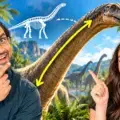 Dinosaurs with necks full of airSeptember 8, 2026
 This is Dino QuestAugust 24, 2026