




 Apple Podcasts
 Spotify
 Player FM
 Pocket Casts
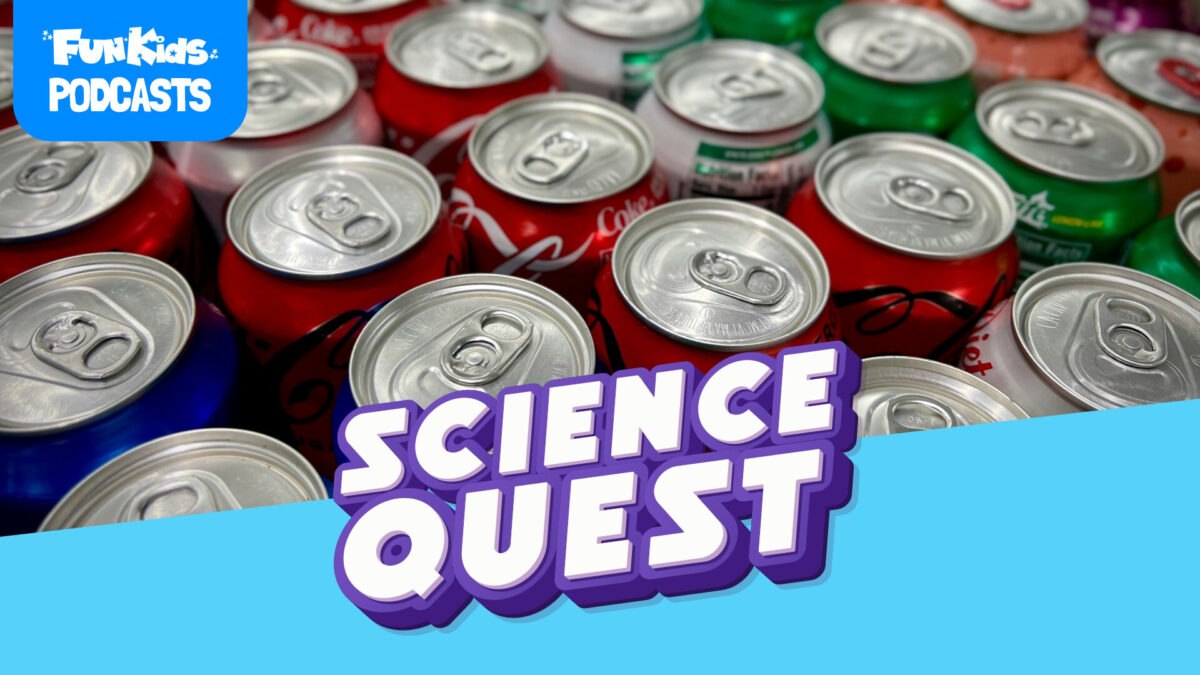
In this episode of Fun Kids Science Quest, Dan discovers how aluminium products like drink cans and foil are made, from giant factory rollers to roaring furnaces.
So how is an aluminium can made…?
- It starts with giant coils of aluminium sheets. Imagine… a silver carpet the size of a monster truck tyre!
- Huge presses stamp perfect little discs out of the aluminium sheets, and every disc looks a bit like a shiny biscuit.
- The flat discs are then pulled and squeezed through special rings which stretch them into tall, thin can shapes. At the same time, the bottom is pushed into a dome shape so the can is able to handle fizzy pressure without popping. Clever engineering, huh!
- The tops are then trimmed so every can is exactly the same height. Precision matters when you’re making more than 2,000 cans every minute.
- The cans then go through a powerful wash, and are scrubbed to remove oils and any tiny metal bits, before bright designs are printed on the outside.
- And finally… the top of the can is gently squeezed smaller, and the edge is curled slightly to get it ready for its lid.
75% of all aluminium cans are recycled – which makes the aluminium can the most recycled drink container in the world! In fact, around 113,200 aluminium cans are recycled every minute… and recycling just 1 aluminium can saves enough energy to power a TV for four hours!
And for aluminium foil?
- Solid blocks of aluminium called ingots are being melted in these furnaces into glowing, silvery liquid, which is then poured into huge rectangular slabs ready for rolling.
- At the start of the rolling process, the slabs are around 45 centimetres thick. They’re heated and squeezed over and over again through enormous rollers. Each pass makes the slab thinner and longer, and by the end of rolling, it’s been flattened to just 2 millimetres thick.
- The aluminium is then cooled and passes through another set of rollers, over and over, getting thinner each time, until it reaches its final thickness.
Now, how thick do you think aluminium foil is? Well, standard household foil is typically 0.0015 cm thick, while heavy-duty foil might be 0.0024 cm. That’s thinner than a human hair!
Aluminium foil has a shiny side and a dull side because of how it is made. To keep the wafer thin metal from tearing, machines roll two layers at the same time. The side touching the shiny steel rollers become polished (so shiny), while the side touching each other stay dull. Shiny or dull doesn’t matter… both sides work exactly the same for cooking and wrapping… and even making crafts.
RECYCLING DETECTIVES!
Time to test your super sleuth skills. Select one room in your house and see how many things in it that are made with aluminium or have aluminium inside them. Ready get set – GO!
Here’s some things you could spot…
Kitchen – Pots, pans, baking sheets and wok pans. Toaster casings, kettle bases and blender trim. Garlic presses, ice cream scoops and meat tenderisers. Foil rolls, drink cans, and spice rack frames. Cabinet handles, drawer pulls, and sink splashbacks.
Living Room – Television frames, soundbar chassis and gaming console plates. Table legs, chair frames and minimalist shelving brackets. Lampshades, track lighting rails and floor lamp poles. Picture frames, clock faces and decorative bowls.
Bathroom – Shower curtain rods, shower screen frames and door tracks. Shower caddies, towel rails and robe hooks. Aerosol deodorant cans, hairspray bottles and shaving cream canisters.
Bedroom – Bedstead, wardrobe sliding tracks and mirror frames. Window latches, curtain poles and door handles.
Personal items – Laptop casings, tablet bodies and watch cases.
Utility Room & Garage – Step ladders, toolboxes and spirit levels. Bicycle frames, clothes airers, garage doors and torch casings.
Find out why this lightweight metal is so useful, how it can be recycled again and again, and become a “Recycling Detective” by spotting aluminium objects around your home. Plus, hear the surprising story of when aluminium was once more valuable than gold!
Here are some clicky links to help you find out more
Click here to listen to the Science Quest Podcast
Click here to find out more about Amazing Aluminium
And Click here for some amazing free aluminium education resources!
Always remember to always recycle your aluminium – whether a drink can or foil tray, foil wrapping or bottle cap – always put your aluminium into your recycling. After all, aluminium is infinitely recyclable.
AMAZING ALUMINIUM
Created with support from Alupro

Join Fun Kids Podcasts+: https://funkidslive.com/plus
Get in touch
Send us a voicemail message and you could appear on Science Quest! Remember to ask a grown-up to help and always get their permission before filling out forms online.