



Meet George
George is a curious student who loves food!
Anything to do with food he wants to know about, so he’s here to help us find out everything we can about baking!
Watch this video…
After that you should have a good idea about how wheat is grown.
What do we use wheat for?
Wheat is a grain that is super important to our diet.
It’s used to make flour which is what we use to make bread!
People eat bread all the time whether it be as a sandwich or as toast in the morning. That means that we need to grow a lot of wheat so that everyone gets their bread!
So how do we grow wheat?
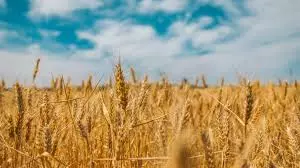
Wheat is grown all over the place but, in the UK, a lot is grown in the East of England because it has conditions that are great for growing wheat.
Wheat grows best in good, rich soils and needs lots of sun and warmth in the summer.
East England has these conditions so there are lots of farms there that grow wheat.
Step 1: Plough the fields
The first thing a farmer will do is plough the field in autumn.
This means that they crush all the weeds and old plants that are on the field already into the soil. They will break down and release lots of nutrients into the soil that the wheat needs to grow.
Step 2: Sow the seeds
Next the farmer will sow his wheat seeds in the field.
They will quickly start to grow but they don’t look like wheat straight away. They start off very small and look like grass.
If you drive around the countryside in autumn you might see these wheat fields.
Step 3: Help them grow
The wheat is growing nicely but farmers will do a couple of things to help them.
One is to use fertiliser on the crop.
Fertiliser helps the wheat grow as it has lots of elements (like nitrogen, phosphate and potassium) that the wheat needs to grow.
Poo is one of the best fertilisers you can use! You can make fertilisers but most farmers just use poo from the animals they have!
Step 4: Harvest the wheat
By June the wheat should be ready to harvest.
The wheat will now be about 60cm tall and at the top of each stalk you should see the ear.
The ear is just the feathery bit at the top of the stalk that contains the grain.
Each ear has about 50 grains of wheat.
It takes 350 ears of wheat to make just one loaf of bread! That’s a lot of wheat we need to grow.
Your mission is to complete this quiz…
What do we make from wheat?
- Flour
- Paper
- Plastic
- Glass
Which part of the UK grows a lot of wheat?
- East of England
- Scottish Highlands
- Snowdonia
- Lake District
When do farmers often plough the fields?
- Autumn
- Spring
- Winter
- Summer
What does ploughing do to weeds and old plants?
- Crushes them into the soil
- Turns them into flowers
- Blows them away
- Makes them grow taller
What do young wheat plants look like at first?
- Grass
- Trees
- Flowers
- Bushes
What do wheat plants need lots of in summer?
- Sun and warmth
- Snow and ice
- Wind and rain
- Fog and mist
Why do farmers plough the field?
- To prepare the soil for seeds
- To make it look tidy
- To scare birds away
- To build a path
What is the first step in growing wheat?
- Plough the fields
- Sow the seeds
- Harvest the wheat
- Bake the bread
What is the second step in growing wheat?
- Sow the seeds
- Plough the fields
- Water the plants
- Cut the wheat
Which soil is best for growing wheat?
- Rich, well-drained soil
- Sandy soil
- Rocky soil
- Clay soil