

Did you know you can have a whole conversation without saying a single word? Sign languages use hand movements, facial expressions and body movements to communicate. There are lots of different sign languages around the world and they have their own fascinating rules and history.
Here are 10 facts about sign language to discover!
1. There are hundreds of different sign languages around the world.
Sign language isn’t one universal language. There are hundreds of different sign languages used by deaf communities around the world.
Just like spoken languages, sign languages have developed in different places over time. British Sign Language, or BSL, is used in the UK, while American Sign Language, or ASL, is used in the United States and parts of Canada. They are different languages, even though both countries speak English.
2. British Sign Language is the main sign language used in the UK.
British Sign Language, usually shortened to BSL, is used by many Deaf people in the UK.
BSL has its own grammar and sentence structure, so it isn’t simply English translated into hand movements. In fact, someone who knows BSL doesn’t automatically know ASL!
3. Sign languages use more than just your hands.
Your hands are important when signing, but they’re not the only part of your body doing the talking!
Facial expressions, head movements, body position and even the direction of a sign can all help communicate meaning. Your face can sometimes change the meaning or feeling of what you’re signing, so signing can be a very expressive way to communicate.
4. Sign languages have their own grammar.
You might think signing is just making a hand shape for every word in a spoken sentence, but it’s much more complicated than that.
Sign languages have their own grammar and rules for putting signs together. This means BSL has a different structure from spoken English, rather than being English word-for-word using your hands.
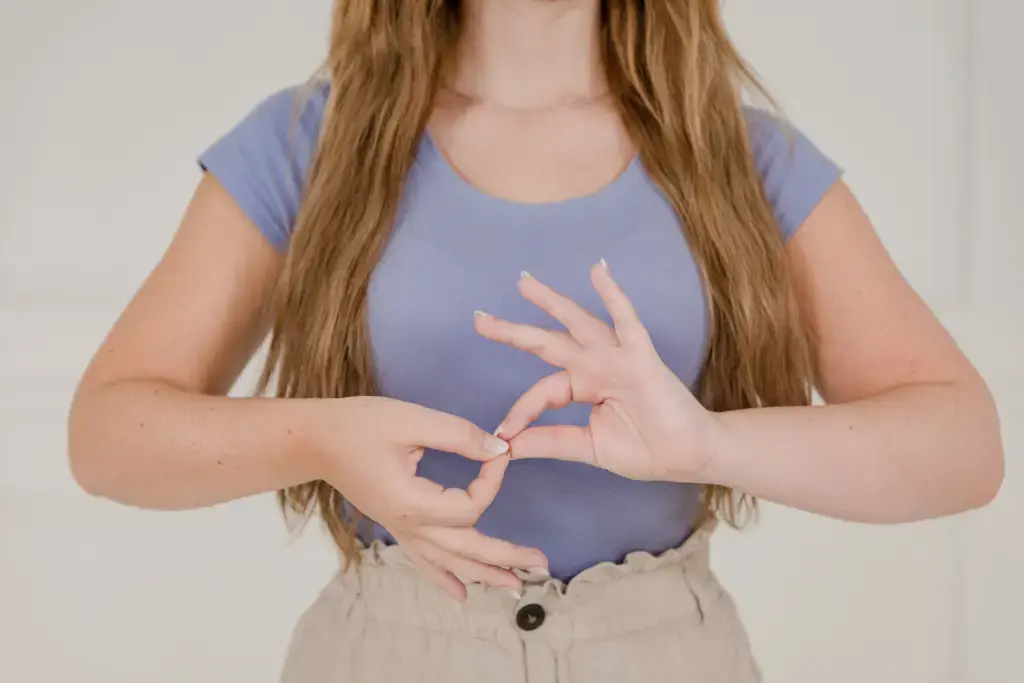
5. Some signs use both hands, while others use just one.
Different signs need different hand shapes and movements.
Some signs are made with one hand, while others use both hands. The position, movement, direction and shape of your hands can all make a difference. Even a small change to a sign can sometimes change its meaning!
6. Sign languages can have regional accents too.
Just like people from different parts of the UK can pronounce words differently, people can use different signs for the same thing depending on where they live.
These regional differences are sometimes called dialects. So you might discover that a sign used in one part of the UK is different from a sign used somewhere else.

7. Sign languages can be written down in different ways.
You might be wondering: if a language is made with movements, how do you write it down?
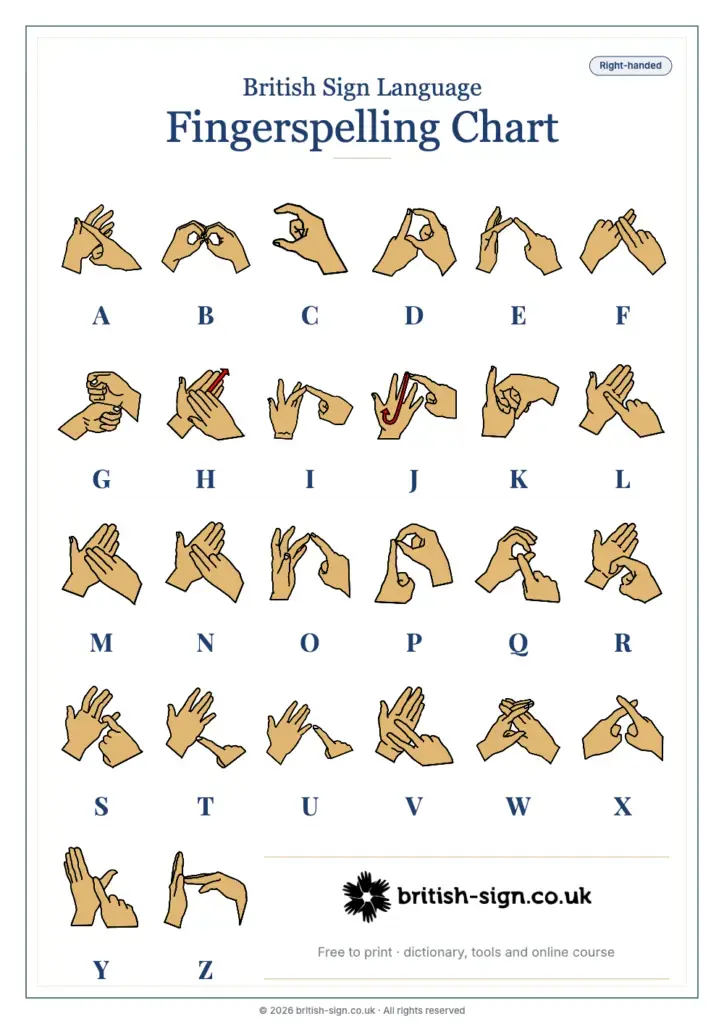
There are systems that can represent signs on paper or digitally, including ways of showing hand shapes, movements and positions. However, there isn’t one single writing system used by everyone who signs.
8. Sign languages have been used for hundreds of years.
People have used signs to communicate for a very long time.
Organised sign languages developed in different places and communities over many years. In the UK, BSL has a long history connected to deaf communities and schools for deaf children.
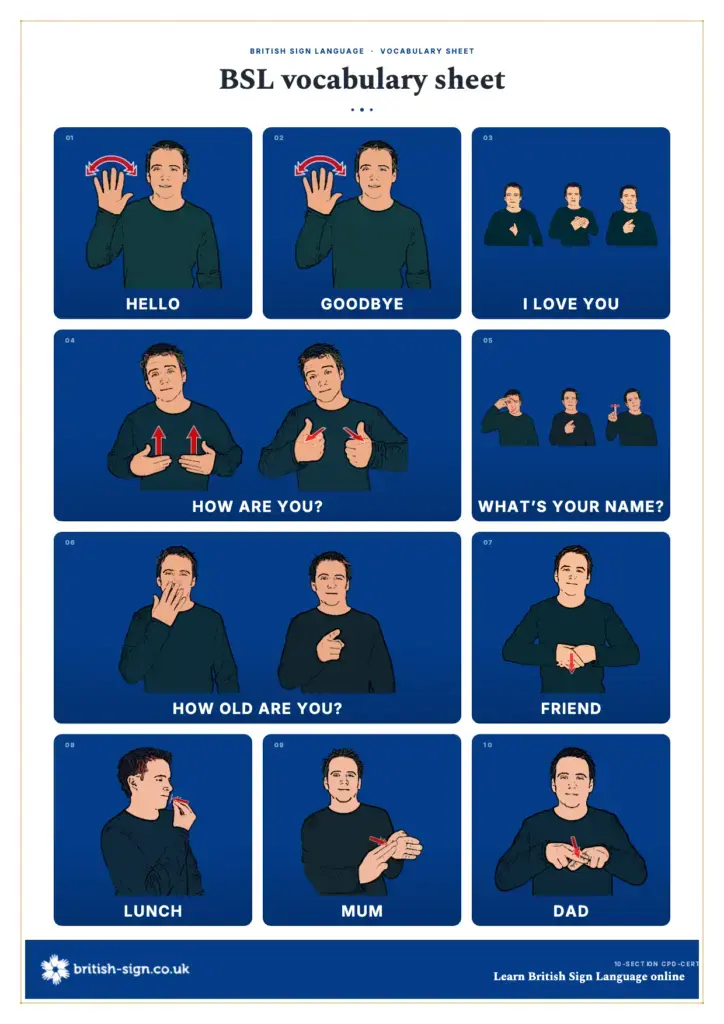
Learn some phrases below!
9. Sign languages can be used to tell stories, sing and perform.
Signing isn’t only useful for everyday conversations. It can also be used for jokes, poems, storytelling, theatre, songs and performances.
Because sign languages can use movement, facial expressions and space, performers can make stories incredibly visual and expressive.
10. International Day of Sign Languages celebrates sign languages and deaf communities.
International Day of Sign Languages takes place every year on 23rd September.
It is a chance to celebrate sign languages and raise awareness of the importance of communication and the rights of deaf people around the world. Each year, people and organisations can use the day to celebrate the richness and variety of sign languages.
So next time you see someone signing, remember that they’re not simply using a secret code or making random hand movements. They’re using a real language, with its own vocabulary, grammar, history and culture!
Add a comment