


Every animal starts small and changes as it grows, until it is old enough to have young of its own. Then it all starts again. That pattern is called a life cycle, and different animals have very different ones. Here are ten facts about animal life cycles, from mammals to butterflies.
1. A life cycle has more than two stages.
It is easy to think animals are either babies or grown-ups, but most go through several stages. People are a good example: we start as babies, then become children, teenagers, adults and older adults. When adults have children of their own, the cycle begins again.
2. Most mammals are born, not hatched.
A mammal’s life cycle usually goes baby → young → adult. The babies grow inside their mother and are born alive, then drink her milk. There are a few odd ones out: the platypus and the echidna are mammals that lay eggs!
3. Bigger mammals usually take longer to be born.
The time a baby spends growing inside its mother is called the gestation period. A golden hamster’s is only about 16 days, a human’s is about nine months, and an African elephant’s is around 22 months: almost two years!
4. Birds start life inside an egg.
A bird’s life cycle goes egg → hatchling → fledgling → adult. The chick is alive inside the egg the whole time, growing until it is ready to peck its way out. Blue tit chicks are ready to leave the nest about three weeks after hatching. Find out more in our Top 10 Facts About Birds.
5. Not every baby looks like its parents.
Puppies and kittens look like small dogs and cats, but some babies look very different. Baby swans, called cygnets, are fluffy and grey-brown, and only turn white as they grow up. Tadpoles look nothing like frogs at all: follow their story in our Top 10 Facts About Amphibians.
6. Butterflies have four stages.
A butterfly’s life cycle goes egg → caterpillar → chrysalis → butterfly. Scientists call these stages egg, larva, pupa and adult, and lots of other insects, like bees, beetles and flies, go through the same four. Changing shape this completely is called metamorphosis.
7. Caterpillars are eating machines.
A caterpillar’s job is to eat and grow. Its skin can’t stretch very far, so as it gets bigger it sheds its old skin and grows a new one, usually four or five times. Many caterpillars only eat one or two kinds of plant: peacock butterfly caterpillars feed on stinging nettles.
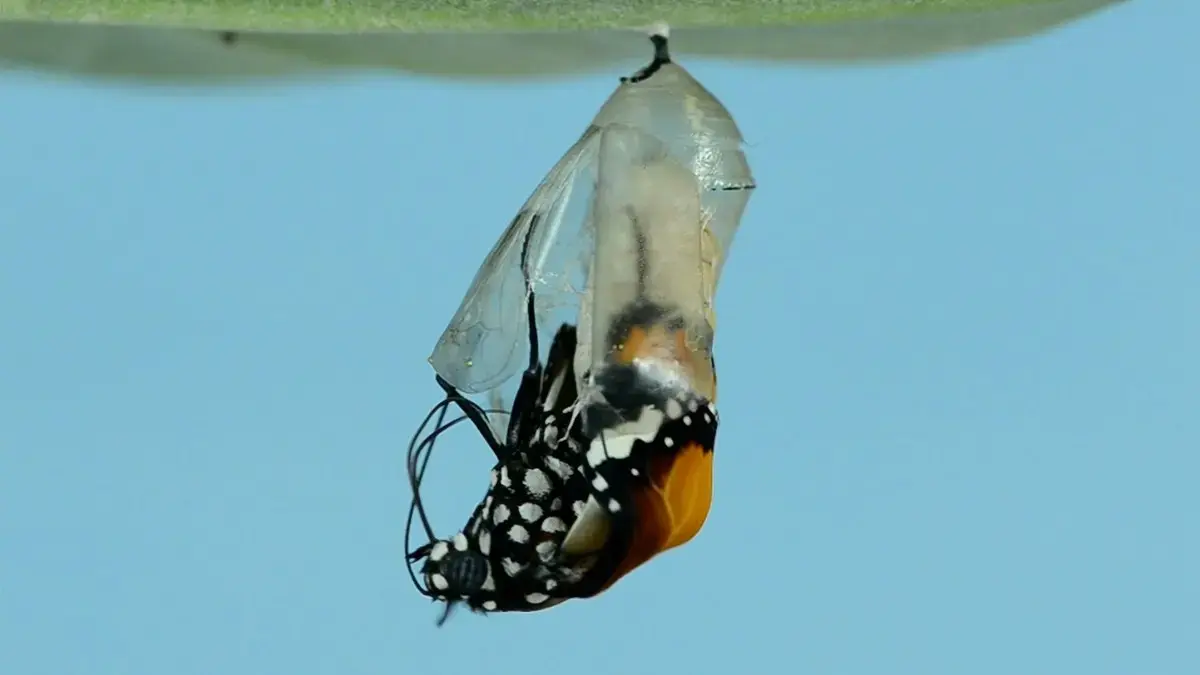
8. A new butterfly has to pump up its wings.
When a butterfly first comes out of its chrysalis, its wings are soft and crumpled. It hangs upside down and pumps fluid from its body into the veins of its wings to stretch them out. Then it waits for them to dry and harden before it can fly.
9. Some insects skip the chrysalis.
Grasshoppers and dragonflies have only three stages: egg → nymph → adult. A nymph looks a bit like a small adult without wings, and grows by shedding its skin. Dragonfly nymphs live underwater, often for a year or more, before they climb up a plant stem and turn into flying adults. Meet more creepy-crawlies in our Top 10 Facts About Bugs.
10. Some life cycles are very short, and some are very long.
Adult mayflies often live for only a day or so: just long enough to find a mate and lay eggs. At the other end, scientists think Greenland sharks can live for more than 250 years, and don’t have young until they are well over 100. Read more about record-breaking fish.
📖 Words to know
- Life cycle
- The way a living thing changes as it grows, from the start of its life until it has young of its own.
- Offspring
- The young of an animal or plant.
- Larva
- The young stage of some animals before metamorphosis, like a caterpillar or tadpole.
- Pupa
- The stage when an insect changes from a larva into an adult. A butterfly’s pupa is called a chrysalis.
- Metamorphosis
- A big change in an animal’s body shape as it grows.
⚠️ Watch out!
How much do you know about life cycles?
What is the right order of a butterfly’s life cycle?
- Egg, caterpillar, chrysalis, butterfly
- Caterpillar, egg, butterfly, chrysalis
- Chrysalis, egg, caterpillar, butterfly
- Egg, butterfly, caterpillar, chrysalis
What is a young swan called?
- A cygnet
- A duckling
- A gosling
- A kitten
Which of these mammals lays eggs?
- Platypus
- Elephant
- Hamster
- Bat
Find out which group each animal belongs to in Top 10 Facts About Animal Groups, and who eats whom in Top 10 Facts About Food Chains.
Send us your favourite facts!
Is there something we've missed? Got a fact you're dying to tell us? Submit it below and we could use it on a future Top 10 Facts page!
Remember to always ask an adult before filling out forms online.