



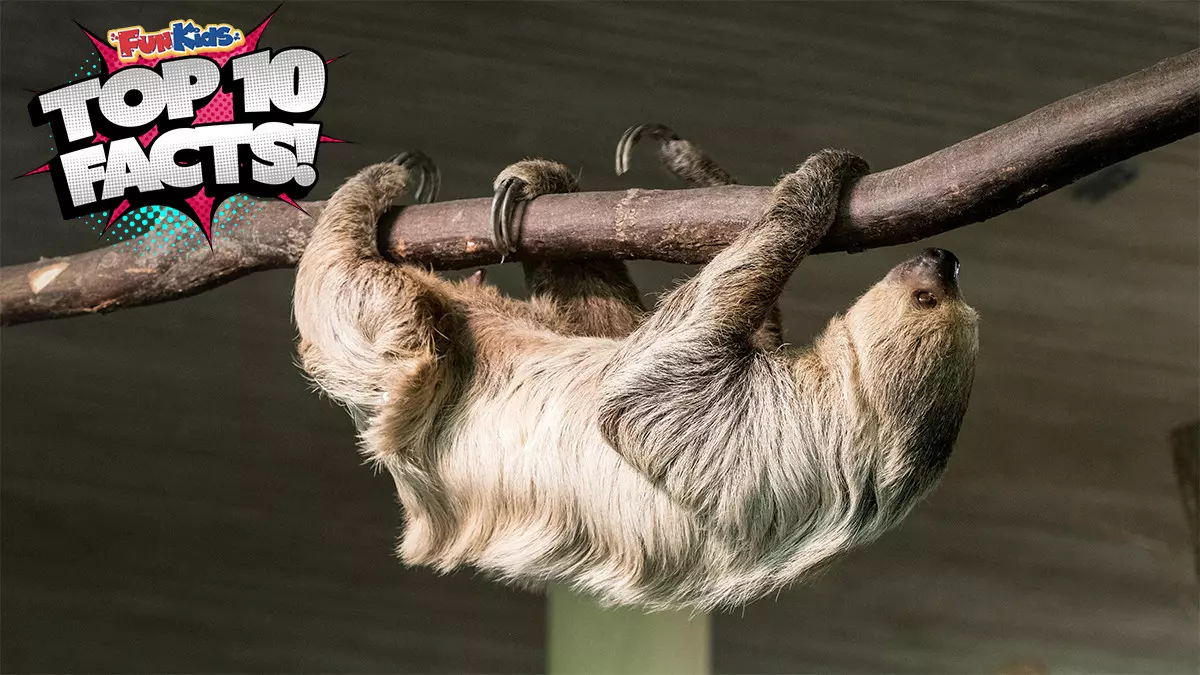
Sloths are some of the most fascinating and unique animals on the planet! These slow-moving tree dwellers are full of surprises, from their incredible swimming abilities to their quirky algae-covered fur. Native to the rainforests of Central and South America, sloths have mastered the art of energy-saving and stealth, helping them survive in their lush, predator-filled habitats. Despite their laid-back lifestyle, sloths play an important role in their ecosystems and are loved by animal enthusiasts everywhere. Let’s dive into some of the most interesting and surprising facts about these adorable creatures!
1. Sloths grow algae on their fur to stay camouflaged.
A sloth’s fur is home to green algae, which helps them blend in with the trees.
This greenish tint provides excellent camouflage, making it harder for predators to spot them.
The algae also give sloths a symbiotic relationship with the environment, benefiting both the animal and the tiny organisms.
Embed from Getty Images2. Sloths are the world’s slowest mammals!
Sloths are so slow that moss and fungi can grow on their fur!
They move at an average speed of 0.17 miles per hour.
This leisurely pace conserves energy as their diet is low in calories.
Embed from Getty Images3. Their claws are their main defence.
Sloths have long, curved claws, which they use to hang from trees and defend themselves.
If a predator like a jaguar gets too close, sloths swipe with surprising strength.
Despite their gentle reputation, they can pack a punch if threatened!
4. Sloths can survive falls from great heights.
Sloths live high up in the rainforest canopy, but they sometimes lose their grip.
Luckily, their flexible skeleton and strong muscles allow them to survive falls of up to 30 metres without serious injury.
Embed from Getty Images5. Sloths’ stomachs are like fermentation factories!
Sloths eat tough leaves, which are hard to digest.
Their stomachs have multiple compartments, like cows, and are filled with bacteria that help break down the leaves.
Digestion is so slow that they only go to the bathroom about once a week!
Embed from Getty Images6. Sloths can twist their heads almost all the way around.
Three-toed sloths can rotate their heads 270 degrees, giving them an incredible range of vision.
This ability comes from having extra vertebrae in their neck, allowing them to spot predators from nearly every angle.
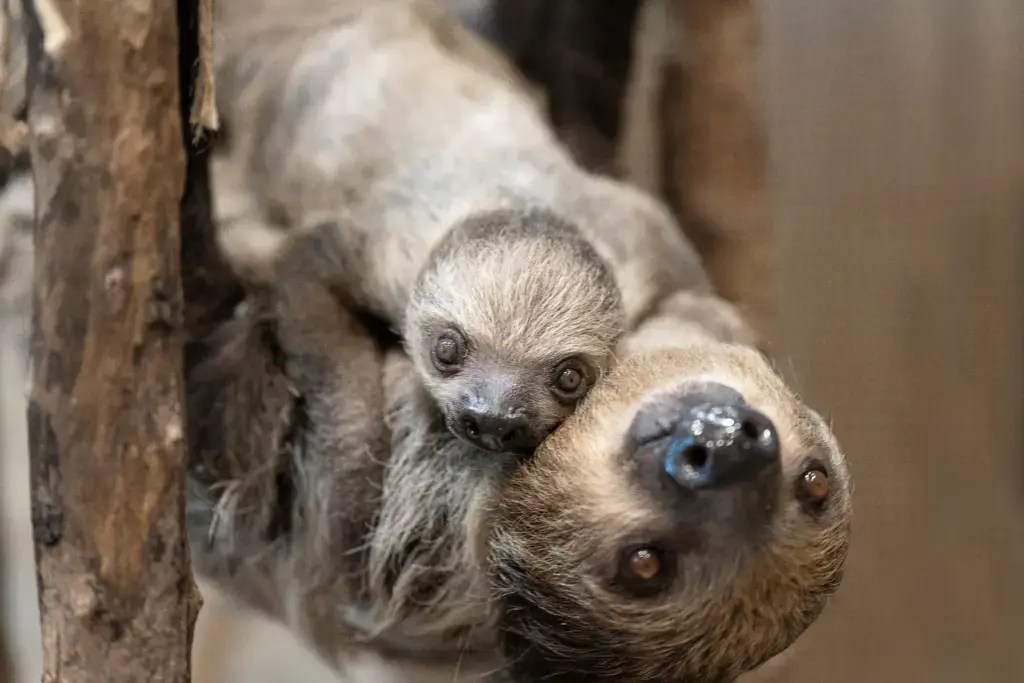
Embed from Getty Images7. Baby sloths talk to their mums.
Baby sloths are incredibly dependent on their mothers for the first few months of life.
They cling to their mum’s fur and make soft squeaking noises to communicate.
If a baby gets separated, it will cry loudly until its mother comes back to find it.
Are polar bears your favourite animal? Check out these facts!
8. Sloths are strong swimmers!
Although they’re slow climbers, sloths are excellent swimmers.
They use their long arms to paddle through rivers and can hold their breath underwater for up to 40 minutes!
Swimming helps them travel between trees if forests are flooded.
Embed from Getty Images9. They have very low body temperatures.
Sloths have one of the lowest body temperatures of any mammal, ranging from 24 to 33°C (75 to 91°F).
Their slow metabolism helps them conserve energy, but it also means they need to sunbathe to warm up on chilly days.
Embed from Getty Images10. Sloths once had giant relatives.
Thousands of years ago, giant ground sloths lived in the Americas. The biggest were as large as an elephant and walked on the ground instead of hanging in trees.
We know about them from their fossils. They died out around 10,000 years ago, but their small cousins still live in the rainforests of Central and South America today.
Sloths are fascinating creatures with unique adaptations that allow them to thrive in their rainforest homes. Their quirky behaviours and unusual lifestyle make them a favourite among animal lovers everywhere!
📖 Words to know
- Mammal
- An animal with hair or fur whose babies drink their mother’s milk.
- Camouflage
- Colours or patterns that help an animal blend in with its surroundings.
- Adaptation
- A feature that helps a living thing survive where it lives, like a sloth’s long, curved claws.
- Fossil
- The remains or traces of a living thing from long ago, preserved in rock.
⚠️ Watch out!
Where do sloths live in the wild?
- In the rainforests of Central and South America
- In the deserts of Africa
- In the snowy mountains of Europe
- In the oceans near Australia
What do sloths mostly eat?
- Leaves
- Fish
- Insects
- Fruit only
How many toes do three-toed sloths have on each front paw?
- Three
- Two
- Four
- Five
Which type of sloth is known for being able to swim?
- Both two-toed and three-toed sloths
- Only two-toed sloths
- Only three-toed sloths
- Neither type can swim
What is a baby sloth called?
- A cub
- A joey
- A kitten
- A pup
How do sloths usually move from tree to tree?
- They hang upside down and move slowly
- They leap quickly
- They fly
- They run on the ground
Why do sloths move so slowly?
- They have a low-energy diet of leaves
- They are lazy
- They are cold-blooded
- They are always sleepy
What is a group of sloths called?
- A snuggle
- A pack
- A herd
- A flock
How many species of sloths are there?
- Six
- Two
- Ten
- One
Which statement about sloths is true?
- They sleep about 15 to 20 hours a day
- They sleep only at night
- They never sleep
- They sleep standing up
Which group?
Sloths are mammals. They have fur, and mothers feed their babies on milk.
Add a comment